Your browser is very old. It's so old that this site will not
work properly as it should.
Your browser is very old. It's so old that this site will not
work properly as it should.

 Find the solution for your needs with our Find My Solutions Tool
Why Digital Transformation Can’t Wait
It’s not whether to digitise your legacy records. It is whether you can afford not to. The technology exists and the business case is proven. Furthermore, the compliance frameworks are well established. What is needed now, ultimately, is the commitment to overhaul legacy practices and position your organisation for a future where smart business practices and consumer technology expectations converge.

Why Digital Transformation Can’t Wait
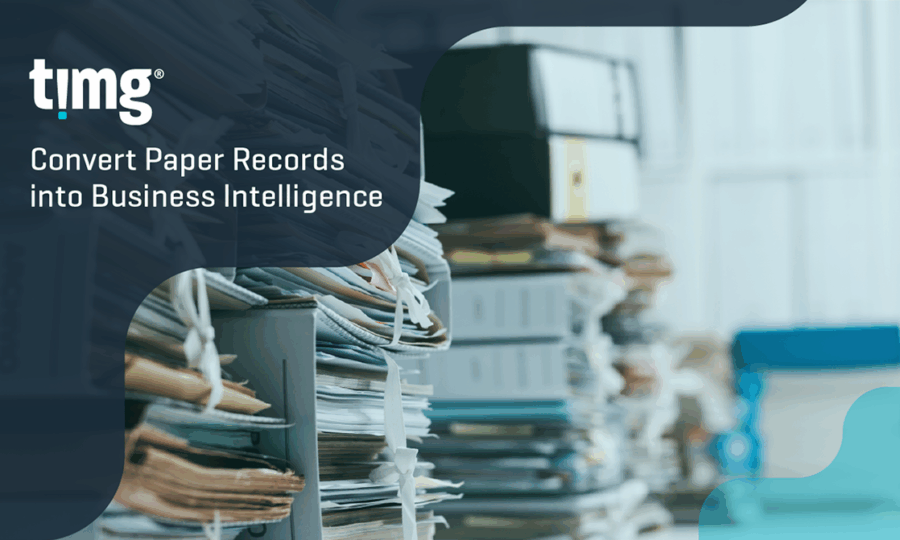
The new calendar year brings fresh ambitions for digital transformation, digital efficiency and cloud collaboration. Yet somewhere in your building, or in an offsite storage facility, hundreds of thousands of legacy paper documents sit untouched. Nobody has accessed them in years. Nobody can find what they need when they need it. And the monthly storage invoice keeps arriving like clockwork.
You know this information holds value. You know the law requires you to retain it. And you know this liminal state, too important to destroy, too inaccessible to use, is draining money, consuming space, and killing opportunity every single day.
If this sounds familiar, a clear path forward exists and it starts with a decision. This is not about going paperless for its own sake. It is about overhauling legacy practices so your organisation stays compliant, operates smarter, and meets the technology expectations that consumers, regulators and stakeholders now take as a given.
Why Each Sector Can’t Afford to Wait
Healthcare organisations carry perhaps the heaviest compliance burden. The Privacy Act 1988 and the Australian Privacy Principles (APPs) demand that health service providers protect patient information through secure handling, controlled access and complete audit trails. Digitisation actively supports these obligations, simultaneously enabling records to integrate seamlessly into electronic health record systems and putting comprehensive patient histories in front of clinicians instantly at the point of care. In an emergency, every minute spent hunting for paper records puts optimal outcomes at risk. Automated retention schedules take that risk off the table, ensuring obsolete records are disposed of correctly and consistently, something paper based systems demonstrably fail to deliver.
Government agencies operate in a landscape of unique complexity: retention requirements ranging from three years to permanent, public accountability demanding rapid retrieval, and security considerations that mandate vetted vendors. Digital systems take the strain, automatically categorising documents by classification and applying appropriate access controls, something paper based systems simply cannot deliver. The outcomes are tangible: faster responses to public records requests, stronger disaster recovery capability, and digital preservation that actively protects irreplaceable historical documents from physical deterioration.
Law firms and legal departments carry the weight of case files spanning decades, any of which can face a discovery request with little warning. Traditional solutions, banker boxes stacked in expensive urban real estate, create significant cost and operational chaos. Digitisation with proper metadata tagging changes everything, transforming discovery from a manual nightmare into a searchable, structured database. Full text search across decades of case files puts precedents and supporting documentation within reach in seconds. Firms that have made the transition report cutting legal research time by 70% or more, a result that speaks directly to the bottom line.
Educational institutions face their own formidable obligations. They must retain student transcripts permanently while actively managing financial aid documents, personnel files and research data across multiple compliance frameworks. The Privacy Act 1988 demands strict security controls across all of it. A single fire or flood in one storage room can wipe out irreplaceable educational histories in an instant. Digital preservation with robust backup eliminates that existential risk entirely, while empowering alumni to receive transcripts digitally within hours rather than days. When decades of institutional data become searchable and analysable, research stops being reactive and starts driving genuinely informed, data led decision making.
The Path Forward with Digital Transformation
Start with inventory. Begin by categorising what you are storing, even roughly. You will likely find that 15 to 30% can be destroyed immediately. Retention periods have already expired on more records than most organisations realise. Acting on this upfront cuts both project scope and cost before digitisation even begins.
Next, choose the right partner. Look for providers with demonstrated experience in your specific sector. They must understand nuanced compliance requirements and deliver secure chain of custody. Intelligent indexing, optical character recognition, seamless platform integration and certified destruction services are all non-negotiable. A partner like TIMG brings end-to-end expertise across the complete data lifecycle. As a result, your information governance is actively and securely managed from start to finish.
Then, calculate the true costs. Factor in current storage fees and the staff time lost retrieving documents. Add the opportunity cost of inaccessible information and the risk exposure that comes with inadequate governance. Most organisations find digitisation pays for itself within 18 to 24 months from storage elimination alone. That is before productivity gains and strategic value enter the equation.
Pilot first if needed. Start with your highest value or most frequently accessed documents. This approach proves the concept quickly and refines your processes early. It also builds organisational confidence before you commit to the full archive. Early wins create internal champions who actively drive broader implementation based on results they have seen firsthand.
Finally, build governance in from day one. Do not recreate paper chaos in digital form. Put retention policies in place that automatically flag documents approaching their destruction dates. Enforce access controls so sensitive information reaches only authorised personnel. Integrate digitised records directly into operational systems so information flows naturally into daily workflows from the moment it is available.
The Bottom Line
Those boxes in storage represent both a burden and an opportunity. The burden is obvious: wasted money, wasted space, and information your organisation is legally required to retain but practically cannot use. The opportunity, however, is far more valuable: searchable institutional knowledge, simplified compliance, reclaimed resources, and the foundation for genuine digital transformation and data-driven operations.
Consumer expectations, meanwhile, have shifted irrevocably. People now demand instant access, complete transparency, and seamless digital experiences in every interaction. As a result, organisations still relying on paper-based systems are not just falling behind operationally, they are actively eroding stakeholder trust and ceding competitive ground.
The question, therefore, is not whether to digitise your legacy records. It is whether you can afford not to. The technology exists and the business case is proven. Furthermore, the compliance frameworks are well established. What is needed now, ultimately, is the commitment to overhaul legacy practices and position your organisation for a future where smart business practices and consumer technology expectations converge.
Reference: oaic.gov.au/privacy/your-privacy-rights/health-information